HOME is where MOTHER is
09/04/2015
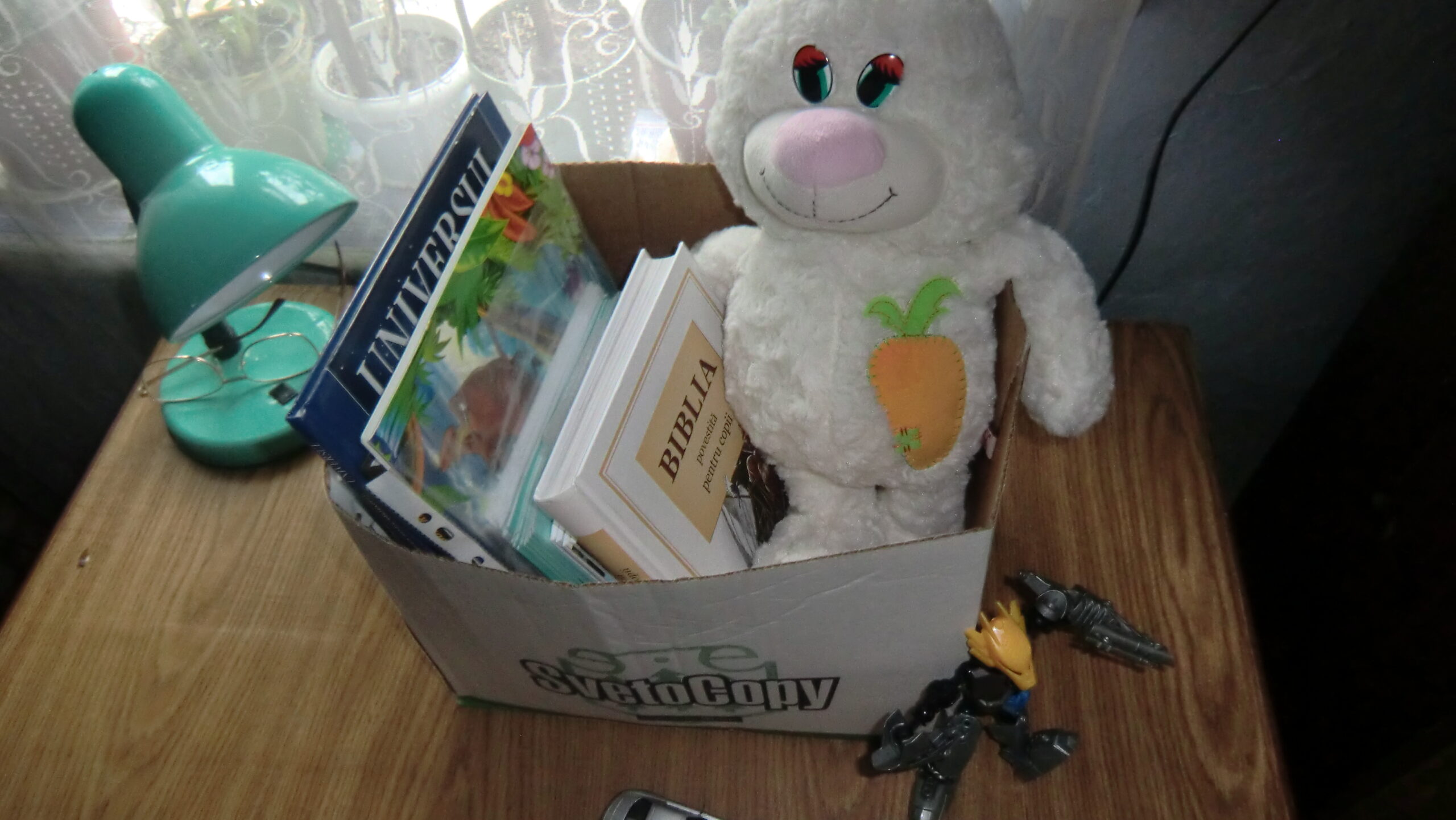
They say a child’s happiness is wherever their mother is. We met Maria (name changed), a mother of two from Soroca district, last year, when—together with a generous group of children, parents, and teachers—we managed to bring a small moment of joy to her family on the eve of winter.
We return now to this family’s story because we want poverty, abandonment, and helplessness to no longer stand in the way of happiness for Maria and her two children.
Maria was born in the town of Kiliya, Odesa region, Ukraine. She remembers with nostalgia the street where she grew up—7 Sevastopolskaya Street—from where she later set out into the world on a long journey in search of happiness, far from her parental home and loved ones.
There were six children in her family—a number for which any woman would rightfully deserve the title of Mother-Heroine. Unfortunately, in this case, the mother was deprived of her parental rights, and the children were placed in different residential institutions across Ukraine. They were separated from one another and have not truly been together since, except for a short time when Maria and one of her sisters were placed in the same institution. Later, Maria was transferred to the auxiliary boarding school in Tuzly, Tatarbunary region, where she completed eight grades, and the sisters were separated once again.
As the years passed, Maria worked and lived for a period in the town of Vyazniki, Vladimir region, Russian Federation. She made friends and met a young man with whom she later decided to settle in a village in Moldova. There, they welcomed their first child, and soon after, their second. Life seemed to have taken a happier turn.
Tragically, during a trip to Ukraine, Maria’s documents—including her passport—were stolen. Without identification papers, the couple could not officially register their relationship. But missing documents were not the only hardship facing the young family. Material deprivation led to the parents’ separation. Left alone with two small children, no stable income, and no home, Maria was forced to look for work. She found employment in the household of a woman who also agreed to provide her with accommodation. However, this meant living apart from her children.
With modest and unstable earnings, someone advised her to place the children in residential care temporarily, until she could regain stability. Without identity documents—therefore without formal employment and a secure income—Maria did not dare bring them home.
Despite everything, she visited them regularly at the institution, especially on weekends. She loves her children deeply and wishes them all the best in the world.
Unfortunately, better times did not come easily. Without identity documents, Maria has never been able to obtain formal employment, nor can she register with the employment office. As a result, she works occasional day jobs.
In an effort to obtain identification documents that would open doors for her, Maria has approached various diplomatic institutions in Moldova, the Russian Federation, and Ukraine. Until these documents are issued, officially, Maria “does not exist.” She is fortunate to receive support from local authorities and assistance from the NGO “Partnerships for Every Child” (PPFC), which is helping this family reunite and eventually become self-reliant. This year, her younger son will graduate from the boarding school and return home. The family will benefit from the Family Support Social Service.
Ion (name changed) is eagerly awaiting his permanent return home, ready to begin a new chapter in his life. He wants to learn a trade so he can support his mother.
Very soon, they will be together again: a mother and her two sons. We hope that this new beginning will bring only positive changes, allowing them to recover the years spent apart and to enjoy their reunion without the shadow of material hardship.
We wish for HOME to truly be the place where everything is possible—when everyone is together, when everyone is safe and healthy.
Until 2017, PPFC implemented the project “A Strong Family for Every Child,” supporting central public authorities and 11 districts across the country in strengthening the child protection system to ensure the well-being, development, and safety of children within their families.